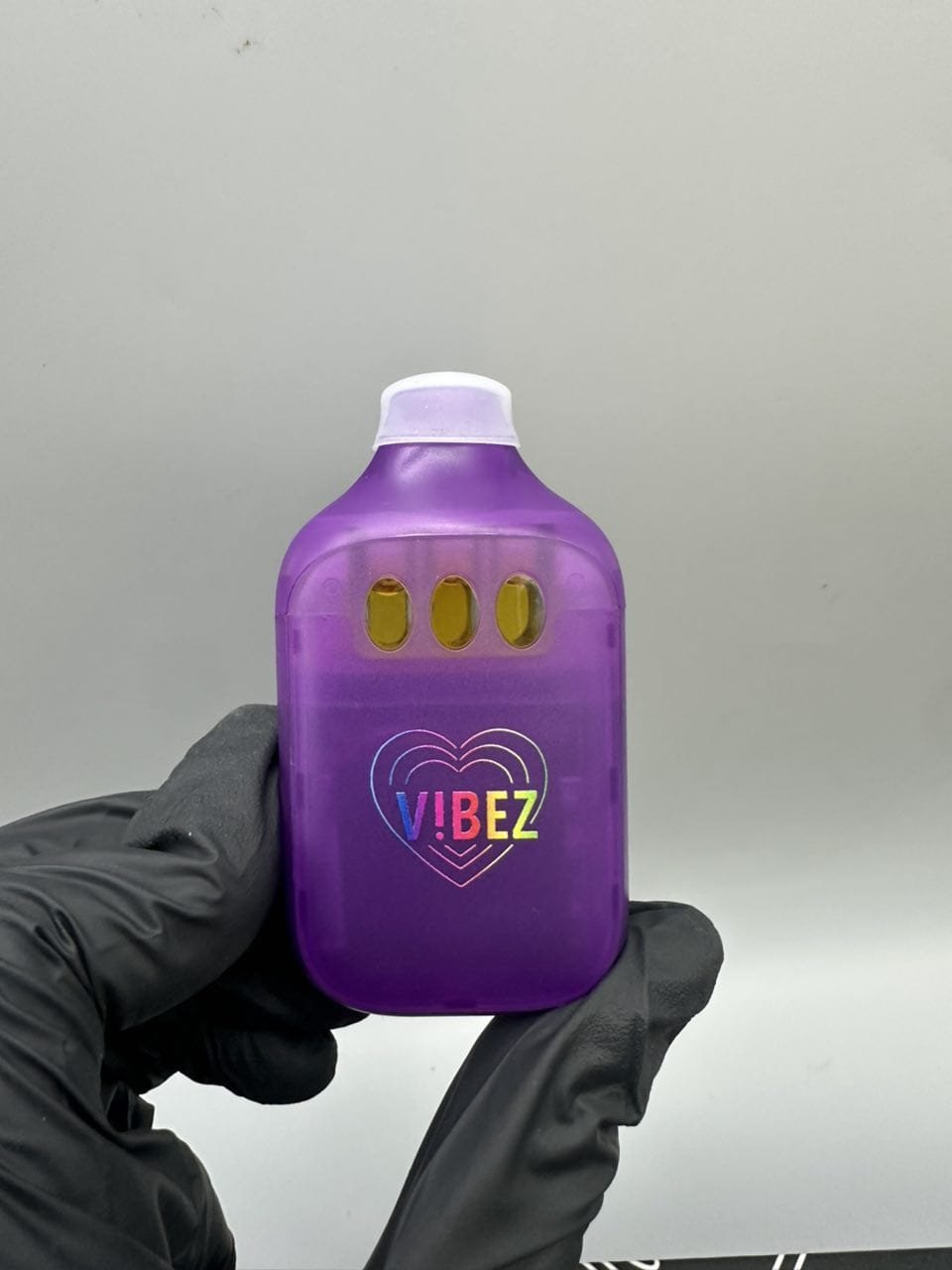
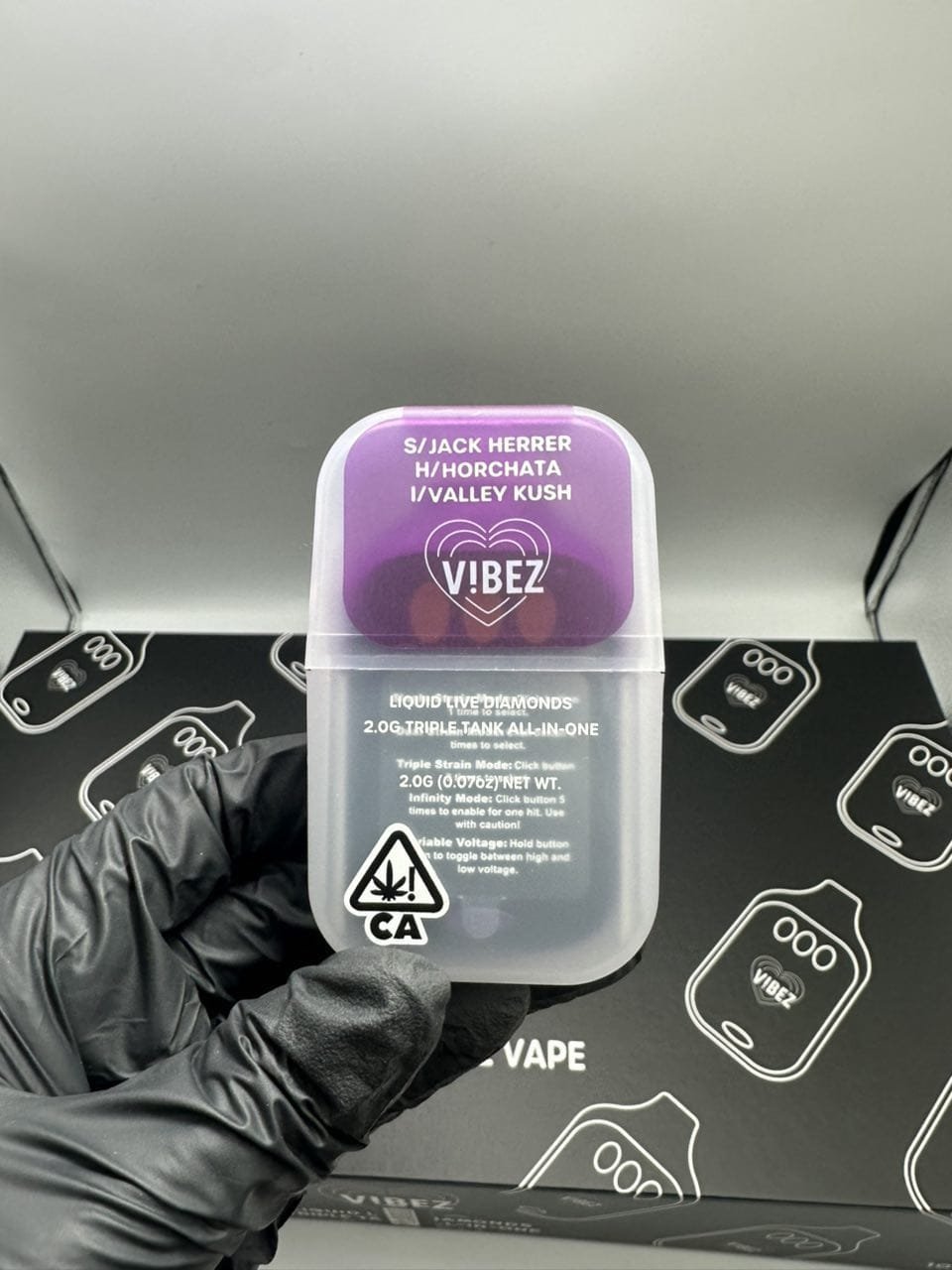
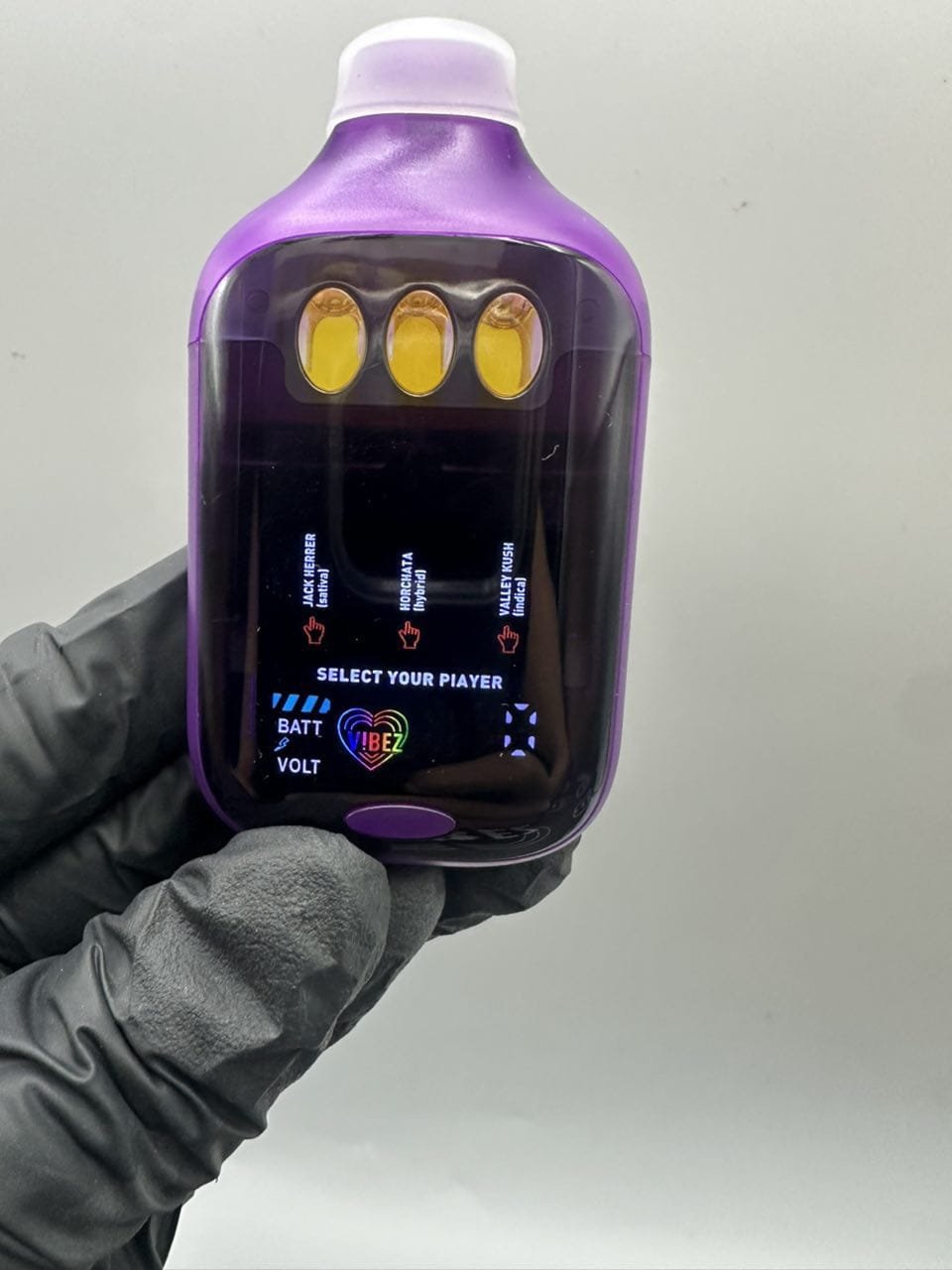
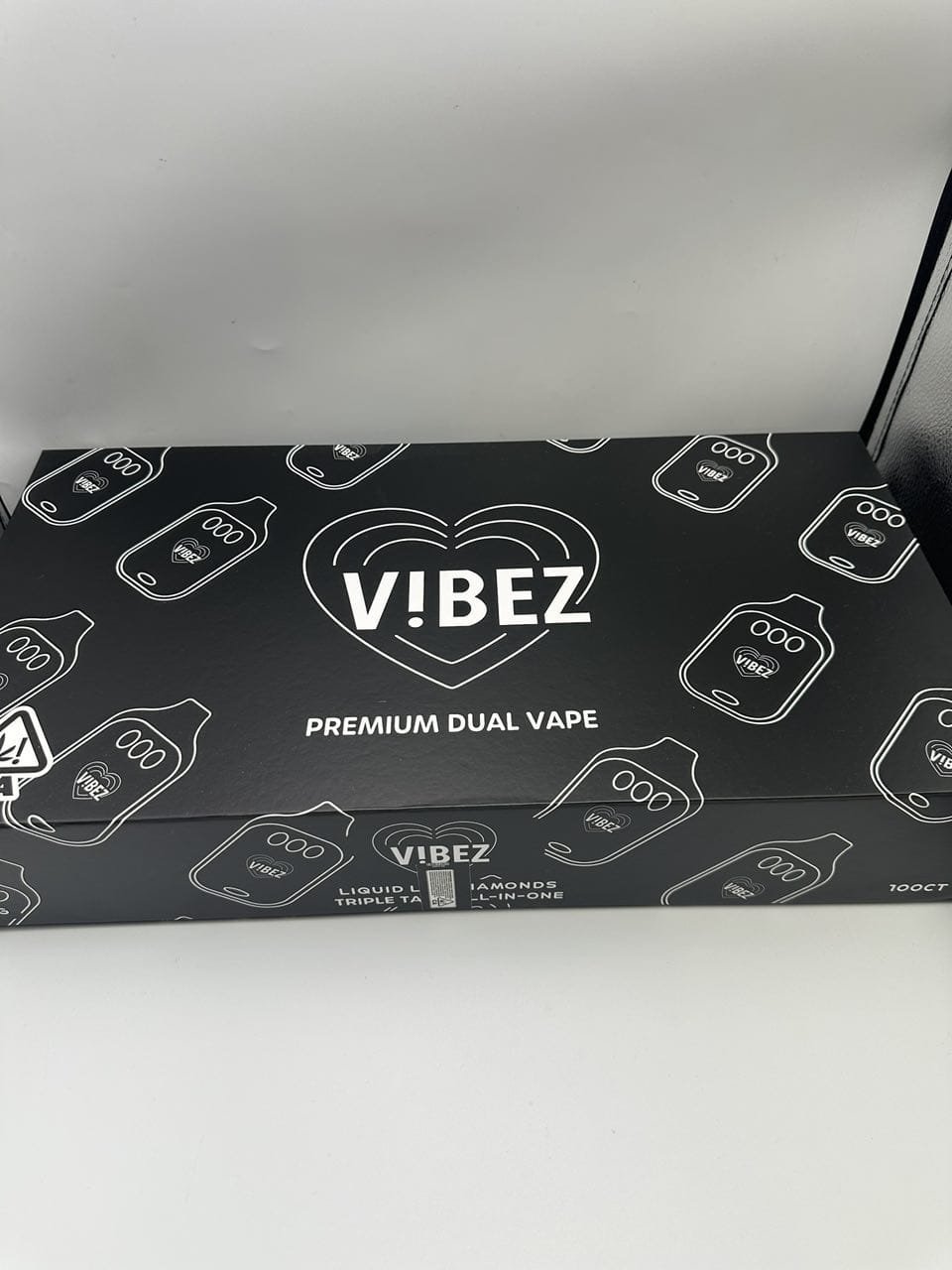
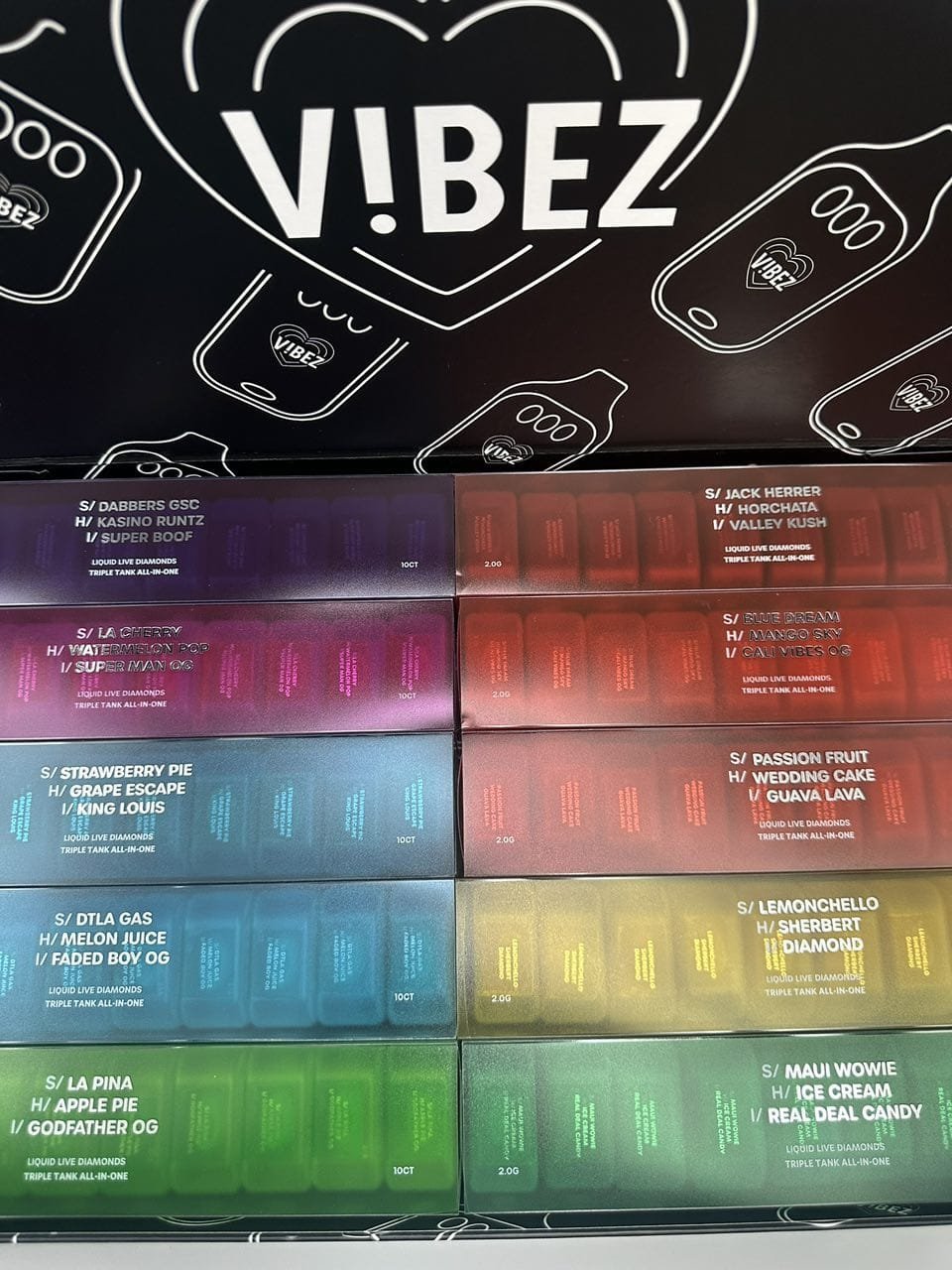

VIBEZ 2G DISPOSABLE PREMIUM TRIPLE CHAMBER FLAVORS
Price range: $28.00 through $2,000.00
VIBEZ 2G Disposable Premium Triple Chamber Flavors is a portable multi-chamber vapor device designed with three separate internal reservoirs inside one compact rechargeable unit. The triple chamber configuration supports independent chamber organization while maintaining a streamlined and pocket-friendly design. In addition, the device features draw-activated functionality, integrated airflow engineering, and rechargeable battery support for consistent operation. Its compact structure combines modern disposable hardware technology with multi-reservoir convenience in an all-in-one format intended for adult users in legal markets.
Description
VIBEZ 2G Disposable Premium Triple Chamber Flavors – Informational Overview
Introduction
 The VIBEZ 2G Disposable Premium Triple Chamber Flavors device belongs to a category of portable vaporization hardware designed with multiple internal reservoirs. Unlike traditional single-chamber disposable systems, triple chamber devices incorporate three separate storage compartments within one integrated housing structure. This design allows independent chamber functionality while maintaining compact portability.
As disposable vapor technology continues evolving, manufacturers increasingly explore multi-chamber engineering to improve flexibility, airflow management, and flavor separation. Consequently, triple chamber devices have become a notable development within modern disposable hardware design.
Understanding Triple Chamber Technology
Triple chamber disposable devices contain three isolated reservoirs positioned inside one unified outer casing. Each chamber typically operates independently through dedicated airflow pathways and heating access points.
This configuration may support:
- Independent flavor separation
- Multiple formulation access
- Compact all-in-one portability
- Simplified switching functionality
- Improved storage organization
Because the chambers remain separated, the internal contents generally maintain distinct characteristics throughout device operation.
Structural Design and Internal Layout
The internal architecture of a triple chamber device is significantly more complex than that of a standard disposable unit. Engineers must carefully organize battery placement, airflow routing, heating components, and reservoir separation while maintaining portability.
Most devices include:
- Rechargeable lithium-ion battery systems
- Draw-activated airflow sensors
- Integrated heating elements
- Multiple internal storage chambers
- Leak-resistant seals
- Compact ergonomic housing
As a result, modern triple chamber devices combine several advanced hardware systems within a relatively small form factor.
Chamber Isolation and Flavor Separation
One of the primary characteristics of triple chamber hardware is reservoir isolation. Manufacturers design separation barriers to reduce cross-contamination between chambers.
Potential functional benefits may include:
- Better flavor preservation
- Reduced blending between chambers
- Independent chamber activation
- Improved vapor consistency
- More controlled switching functionality
In addition, chamber separation can help maintain different viscosity profiles inside individual reservoirs.
Airflow Engineering
Airflow management strongly influences vapor production, inhalation smoothness, and device consistency. Therefore, manufacturers carefully engineer airflow pathways to maintain stable performance across all three chambers.
Modern airflow systems may include:
- Dedicated intake channels
- Automatic pressure sensors
- Controlled airflow routing
- Condensation management systems
- Leak-resistant barriers
Balanced airflow design helps support consistent vapor delivery while reducing operational instability.
Heating Technology
 Most disposable devices rely on integrated heating systems that convert stored liquid into inhalable vapor. Triple chamber systems may use either shared heating technology or independent chamber-specific heating components.
Common heating configurations include:
- Ceramic atomizers
- Mesh heating systems
- Wick-based coils
- Dual or triple heating pathways
Ceramic technology has become increasingly common because it may improve thermal consistency and reduce overheating risks.
Rechargeable Battery Systems
Rechargeable functionality has become increasingly standard within modern disposable hardware. Instead of discarding devices after battery depletion, users can recharge the internal battery until the chambers are fully consumed.
Many devices now include:
- USB-C charging ports
- Battery protection systems
- Overcharge prevention
- Voltage regulation
- Temperature monitoring
Because multi-chamber systems often require additional power management, efficient battery engineering remains especially important.
Portability and Ergonomic Construction
Despite containing three internal reservoirs, most triple chamber disposable devices remain relatively compact. Manufacturers continue refining internal layouts to balance portability with structural efficiency.
Common ergonomic features include:
- Rounded exterior edges
- Lightweight construction
- Pocket-friendly dimensions
- Slim-profile housing
- Comfortable mouthpiece alignment
Compact engineering allows the device to remain portable without significantly increasing external size.
Leak Prevention Systems
Leak resistance remains a critical engineering priority in multi-chamber hardware systems. Since triple chamber devices contain multiple liquid pathways, manufacturers often reinforce sealing structures extensively.
Leak prevention strategies may include:
- Silicone gasket systems
- Chamber isolation walls
- Pressure-balanced airflow channels
- Reinforced atomizer housing
- Internal condensation barriers
These structural elements help improve reliability during storage and transportation.
Vapor Production and Consistency
Several variables influence vapor consistency within disposable hardware systems, including:
- Battery output stability
- Coil temperature control
- Airflow calibration
- Liquid viscosity
- Chamber pressure balance
Manufacturers attempt to optimize these factors through integrated engineering systems designed to maintain smooth operation throughout the device lifespan.
Disposable Device Evolution
Disposable vapor hardware has evolved rapidly over the past several years. Earlier designs focused primarily on simplicity, whereas newer systems increasingly emphasize advanced engineering and rechargeable functionality.
Recent industry trends include:
- Multi-chamber designs
- Improved ceramic heating systems
- Enhanced airflow technology
- Compact high-capacity batteries
- More efficient leak-resistant construction
Triple chamber devices represent one example of this broader hardware evolution.
Storage and Handling Considerations
Proper handling practices may help preserve device integrity and operational consistency.
General recommendations include:
- Store in cool, dry conditions
- Avoid prolonged heat exposure
- Keep upright when possible
- Prevent contact with moisture
- Use approved charging equipment
Environmental conditions can influence both battery stability and liquid performance.
Environmental Considerations
Disposable electronic devices contribute to electronic waste streams because they contain batteries, circuitry, and composite materials.
Common internal materials may include:
- Lithium-ion batteries
- Metal heating components
- Plastic housing
- Electronic sensors
- Wiring systems
Responsible disposal through approved electronic recycling programs may help reduce environmental impact.
Final Overview
The VIBEZ 2G Disposable Premium Triple Chamber Flavors device represents a category of portable multi-chamber vapor hardware engineered for compact convenience and chamber separation functionality. Triple chamber systems combine several internal technologies within one integrated disposable unit while maintaining independent reservoir organization.
As hardware innovation continues advancing, manufacturers will likely further refine airflow systems, battery efficiency, heating technology, and structural engineering within future disposable device designs.
Triple Chamber Technology and Multi-Reservoir Engineering
Triple chamber technology represents an advanced approach to disposable vapor device engineering. Unlike standard single-reservoir systems, triple chamber devices incorporate three isolated storage compartments within one integrated housing structure. This design allows separate chamber functionality while maintaining compact portability and streamlined operation.
As disposable hardware technology evolves, manufacturers increasingly experiment with multi-reservoir systems to improve flexibility, airflow control, and chamber organization. Consequently, triple chamber engineering has become a notable innovation within modern vapor hardware development.
Understanding Triple Chamber Architecture
A triple chamber disposable device contains three independent reservoirs positioned inside a unified outer shell. Each chamber operates separately, although the device itself functions as one integrated unit.
Most systems include:
- Three isolated liquid reservoirs
- Separate airflow routing pathways
- Integrated heating components
- Rechargeable battery systems
- Draw-activated operation
- Internal sealing structures
Because the chambers remain separated, manufacturers can maintain distinct chamber organization throughout device operation.
Why Manufacturers Use Multi-Chamber Systems
Manufacturers continue developing multi-chamber hardware because users increasingly value flexibility and compact convenience. Instead of carrying multiple devices, individuals can access several chamber options within one portable unit.
Potential functional advantages may include:
- Independent chamber access
- Reduced need for multiple devices
- Better chamber organization
- Improved portability
- Simplified switching functionality
In addition, multi-chamber devices may help maintain more consistent separation between internal reservoirs.
Internal Reservoir Separation
Reservoir isolation remains one of the most important aspects of triple chamber engineering. Manufacturers carefully reinforce internal chamber walls to reduce blending between compartments.
Several structural techniques help maintain separation:
- Reinforced divider walls
- Silicone sealing systems
- Controlled airflow routing
- Independent intake pathways
- Pressure-balanced chamber layouts
Because chamber integrity directly affects device functionality, manufacturers place significant emphasis on internal separation systems.
Airflow Distribution Systems
 Airflow engineering strongly influences vapor production, inhalation smoothness, and operational consistency. Therefore, triple chamber systems often rely on carefully calibrated airflow structures.
Modern airflow systems may include:
- Independent intake channels
- Centralized vapor pathways
- Automatic pressure sensors
- Controlled airflow calibration
- Condensation management systems
Balanced airflow helps maintain smoother operation across all three chambers while reducing airflow instability during repeated use.
Chamber Switching Mechanisms
Different manufacturers implement chamber selection systems in different ways. Some devices rely on physical selectors, while others use rotating airflow mechanisms or integrated switching pathways.
Common switching methods include:
- Slide selector systems
- Rotational airflow controls
- Button-assisted chamber activation
- Mechanical airflow switches
- Integrated chamber toggles
Because convenience remains a central design priority, manufacturers continue simplifying switching functionality in newer hardware models.
Heating Technology in Triple Chamber Devices
Heating systems convert stored liquid into inhalable vapor. Triple chamber devices may use either shared heating systems or chamber-specific atomizers depending on the internal architecture.
Common heating technologies include:
- Ceramic atomizers
- Mesh heating systems
- Wick-based coils
- Multi-path heating elements
Ceramic heating systems have become increasingly common because they may support more even thermal distribution and improved vapor consistency.
Ceramic Coil Systems
Ceramic heating technology continues gaining attention within disposable hardware engineering. Unlike traditional cotton-based systems, ceramic atomizers rely on porous heating structures that absorb liquid evenly.
Potential functional characteristics may include:
- More balanced heating performance
- Reduced overheating risk
- Improved thermal stability
- Better high-viscosity compatibility
- Smoother vapor consistency
As heating technology advances, ceramic systems remain a major focus within modern disposable device design.
Rechargeable Battery Engineering
Most modern triple chamber devices use rechargeable lithium-ion battery systems. Because multi-chamber hardware may require additional power management, battery efficiency becomes especially important. VIBEZ 2G DISPOSABLE PREMIUM TRIPLE CHAMBER
Rechargeable systems commonly include:
- USB-C charging ports
- Intelligent voltage regulation
- Overcharge protection
- Short-circuit prevention
- Battery temperature monitoring
Rechargeable functionality may help extend operational lifespan while reducing premature battery depletion. VIBEZ 2G DISPOSABLE PREMIUM TRIPLE CHAMBER
Draw-Activated Functionality
Many disposable devices use draw-activated systems rather than manual firing buttons. Internal airflow sensors detect inhalation pressure and automatically activate the heating component. VIBEZ 2G DISPOSABLE PREMIUM TRIPLE CHAMBER
This technology supports:
- Simplified operation
- Compact external design
- Faster activation response
- Reduced mechanical complexity
- Improved portability
Because ease of use remains highly important, draw-activated systems dominate much of the disposable hardware market. VIBEZ 2G DISPOSABLE PREMIUM TRIPLE CHAMBER
Compact Engineering Challenges
Integrating three separate chambers inside one disposable device presents significant engineering challenges. Manufacturers must carefully balance battery placement, airflow routing, and chamber spacing while preserving portability. VIBEZ 2G DISPOSABLE PREMIUM TRIPLE CHAMBER
Several design priorities influence compact engineering:
- Weight distribution
- Internal airflow balance
- Structural durability
- Leak prevention
- Thermal management
As a result, triple chamber hardware often involves highly optimized internal layouts. VIBEZ 2G DISPOSABLE PREMIUM TRIPLE CHAMBER
Leak Resistance and Internal Sealing
Leak prevention remains a major concern in disposable device manufacturing. Since triple chamber systems contain multiple reservoirs and airflow pathways, reinforced sealing systems become essential. VIBEZ 2G DISPOSABLE PREMIUM TRIPLE CHAMBER
Common leak prevention strategies include:
- Silicone gasket reinforcement
- Chamber pressure balancing
- Internal condensation barriers
- Secure atomizer housing
- Separated airflow routing
Improved sealing technology may help maintain device reliability during storage and transportation. VIBEZ 2G DISPOSABLE PREMIUM TRIPLE CHAMBER
Condensation Management Systems
Condensation naturally forms during vapor production. Therefore, manufacturers incorporate internal structures designed to reduce moisture accumulation inside airflow channels. VIBEZ 2G DISPOSABLE PREMIUM TRIPLE CHAMBER
Condensation control systems may include:
- Airflow cooling pathways
- Internal moisture barriers
- Vapor separation zones
- Chamber drainage structures
Effective condensation management can help improve airflow stability while reducing leakage risks. VIBEZ 2G DISPOSABLE PREMIUM TRIPLE CHAMBER
Thermal Regulation and Heat Distribution
Heat management strongly affects vapor consistency and device stability. Excessive heat may influence battery performance, airflow balance, and internal component durability. VIBEZ 2G DISPOSABLE PREMIUM TRIPLE CHAMBER
Manufacturers often implement:
- Temperature monitoring systems
- Controlled voltage output
- Heat-resistant exterior materials
- Chamber insulation spacing
- Airflow-assisted cooling
Balanced thermal regulation helps maintain smoother operation throughout the intended device lifespan. VIBEZ 2G DISPOSABLE PREMIUM TRIPLE CHAMBER
Device Portability and Ergonomic Design
Despite containing multiple internal systems, most triple chamber devices remain relatively compact. VIBEZ 2G DISPOSABLE PREMIUM TRIPLE CHAMBER Engineers continue refining structural layouts to preserve portability while maximizing internal efficiency. VIBEZ 2G DISPOSABLE PREMIUM TRIPLE CHAMBER
Common ergonomic features include:
- Rounded exterior contours
- Lightweight construction
- Slim-profile dimensions
- Pocket-friendly housing
- Comfortable mouthpiece alignment
Portability remains one of the defining priorities within modern disposable hardware development. VIBEZ 2G DISPOSABLE PREMIUM TRIPLE CHAMBER
Evolving Multi-Chamber Hardware Trends
Disposable hardware technology continues evolving rapidly as manufacturers experiment with new engineering approaches and material systems. VIBEZ 2G DISPOSABLE PREMIUM TRIPLE CHAMBER
Recent trends include:
- Higher-capacity rechargeable batteries
- More efficient ceramic atomizers
- Improved airflow precision
- Smaller internal component layouts
- Enhanced leak-resistant construction
Consequently, triple chamber devices represent part of a broader trend toward increasingly sophisticated disposable hardware systems. VIBEZ 2G DISPOSABLE PREMIUM TRIPLE CHAMBER
Future Development Possibilities
Future multi-chamber hardware systems may continue advancing in several areas:
- Smarter power regulation
- Improved recyclable materials
- More compact battery systems
- Enhanced airflow automation
- Advanced thermal management technology
As engineering capabilities improve, manufacturers will likely continue refining portability, efficiency, and structural reliability. VIBEZ 2G DISPOSABLE PREMIUM TRIPLE CHAMBER
Final Thoughts on Triple Chamber Engineering
Triple chamber disposable devices combine multiple reservoirs, airflow systems, heating components, and rechargeable power technology within one compact housing structure. This engineering approach supports independent chamber organization while maintaining portability and simplified operation. VIBEZ 2G DISPOSABLE PREMIUM TRIPLE CHAMBER
As modern hardware technology progresses, multi-chamber systems will likely remain an important focus within disposable vapor device innovation. VIBEZ 2G DISPOSABLE PREMIUM TRIPLE CHAMBER
Additional information
| FLAVORS | JACK HERRER (S) / HORCHATA (H) / VALLEY KUSH (I), MAUI WOWIE (S) / ICE CREAM (H) / REAL DEAL CANDY (I), DABBERS GSC (S) / KASINO RUNTZ (H) / SUPER BOOF (I), BLUE DREAM (S) / MANGO SKY (H) / CALI VIBES OG (1), STRAWBERRY PIE (S) / GRAPE I (H) / KING LOUIS (1), LA PINÁ (S) / APPLE PIE (H) / GODFATHER OG (1), LA CHERRY (S) / WATERMELON POP (H) / SUPER MAN OG (I), LEMONCELLO (S) / SHERBERT (H) / DIAMOND (I), PASSION FRUIT (S) / WEDDING CAKE (H) / GUAVA LAVA (1), DTLA GAS (S) / MELON JUICE (H) / FADED BOY OG (I), 10PK (MIXED FLAVORS), 25PK (MIXED FLAVORS), 50PK (MIXED FLAVORS), 100PK (MIXED FLAVORS), 250PK (MIXED FLAVORS) |
|---|
1 review for VIBEZ 2G DISPOSABLE PREMIUM TRIPLE CHAMBER FLAVORS
Related products
-
Sale!

2G ACE ULTRA PREMIUM
Price range: $25.00 through $7,000.00Select options This product has multiple variants. The options may be chosen on the product page -
Sale!

CRYBABY 2G DISPOSABLE
Price range: $25.00 through $7,000.00Select options This product has multiple variants. The options may be chosen on the product page -
Sale!

BACKPACKBOYZ 2G DISPOSABLE
Price range: $25.00 through $6,500.00Select options This product has multiple variants. The options may be chosen on the product page -
Sale!

PUFF LA 2G DISPOSABLE
Price range: $25.00 through $7,000.00Select options This product has multiple variants. The options may be chosen on the product page
zoritoler imol –
I have been absent for a while, but now I remember why I used to love this site. Thanks, I will try and check back more frequently. How frequently you update your site?